

Why Cleaning Standards Matter in Luxury Retail
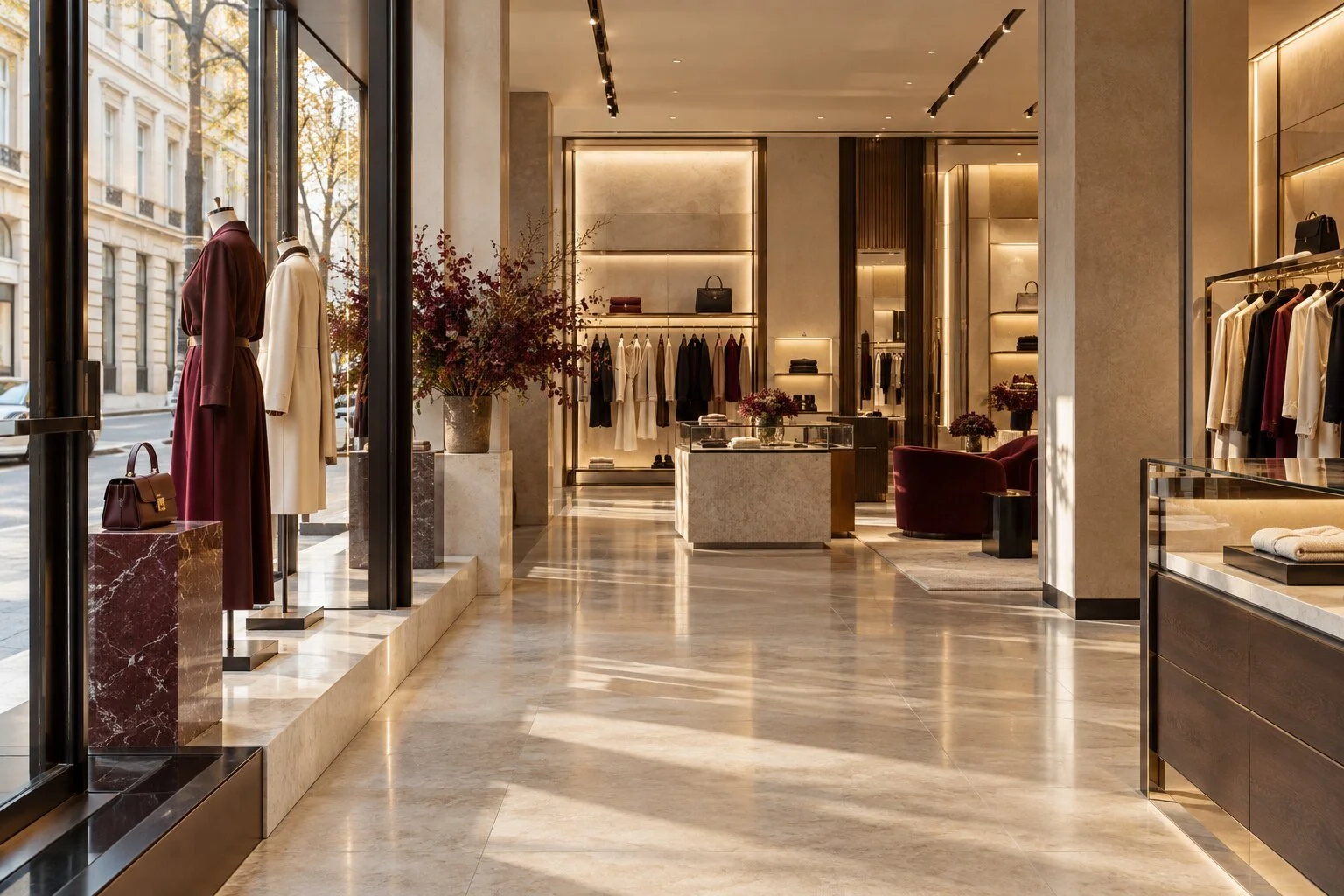
Luxury retail interior maintained to premium cleaning standards
By Maintaining Matters UK
In luxury retail, the space around the product is part of the product experience. Customers may not consciously catalogue every polished surface, clear pane of glass or well-kept fitting room, but they notice when the overall environment feels considered — and they notice even faster when it does not.
Cleaning standards therefore do more than keep a store presentable. They help protect the atmosphere the brand has worked to create, support staff during trading hours and make it easier for customers to focus on the merchandise rather than the building around it.
Luxury is judged at the edges
Premium stores are designed with precision. Materials, lighting, scent, music, spacing and service are usually chosen deliberately. Cleanliness sits alongside those decisions because it affects how all of them are perceived.
A fingerprint on a glass door, dust caught in directional lighting or marks around the base of a display can feel disproportionately noticeable in a refined setting. The issue is rarely one dramatic failure. More often, it is a collection of small inconsistencies that weakens an otherwise carefully managed environment.
This is why luxury retail cleaning should not be treated as a generic checklist. The standard must reflect the finish of the store, the sensitivity of its materials, the volume and behaviour of visitors, and the way the space is used throughout the day.
The first impression begins before the threshold
A customer starts forming an impression before speaking to a member of staff. External glazing, the entrance, door furniture and the condition of the threshold all contribute to that first moment.
In busy London locations, these areas work hard. Rain, traffic film, fingerprints and footfall can quickly change the appearance of a storefront. A sensible plan distinguishes between what must be maintained during trading hours and what can be completed more thoroughly before opening or after closing.
For many stores, that means frequent attention to entrance glass and touchpoints, supported by a planned window-cleaning programme rather than waiting until the deterioration becomes obvious.
The environment should support the merchandise
Products are easier to appreciate when their surroundings are calm and controlled. Dust on shelving, debris at the edge of a fixture or smears on a mirror all compete for attention. Highly reflective materials make this especially unforgiving: glass, polished metal, stone and dark glossy finishes can reveal marks that would disappear in a less exacting environment.
The cleaning method matters as much as the frequency. An unsuitable chemical, cloth or machine can leave residue, create streaking or affect a specialist finish. Before work begins, the team should understand the materials in the store and the manufacturer’s care guidance where it is available. “Clean” is not a single technique.
Four areas that quietly reveal the standard
Glazing and mirrors. These surfaces are part of the architecture and visual merchandising. Smears become more visible under strong lighting and can reduce the clarity of the whole display.
Flooring. A well-maintained floor provides a visual foundation for the space. Entrances, corners, routes around displays and fitting-room approaches often show wear first. Daily cleaning should be supported by the right periodic treatment for the surface, rather than increasingly aggressive routine cleaning. Our hard-floor treatment page outlines the distinction between everyday care and restorative work.
Fitting rooms and consultation areas. Customers spend longer here and examine their surroundings more closely. Mirrors, seating, ledges, hangers and floors need a standard that holds up at short distance.
High-touch details. Handles, payment areas, lift buttons and shared touchpoints may be small, but they influence the sense that the environment is being actively cared for.
Cleaning must work around the customer experience
The best cleaning plan is not only thorough; it is operationally aware. No customer should have to navigate trailing cables, strong chemical odours or avoidable disruption. Equally, a beautifully cleaned floor is not a success if it has been left unsafe or unavailable at the wrong time.
The Health and Safety Executive advises that cleaning itself can introduce slip and trip risks, particularly through damp floors, equipment and cables. Its retail guidance on slips and trips reinforces the need for suitable methods, timing and controls.
For that reason, a retail cleaning specification should separate work into sensible windows:
pre-opening presentation work;
discreet in-day checks and rapid response;
after-hours detailed cleaning; and
planned periodic maintenance for floors, glazing and other specialist finishes.
This structure protects both presentation and trading activity.
Consistency matters more than an occasional reset
A deep clean can restore a space, but it cannot replace a reliable daily standard. Premium retail environments benefit from clear expectations, stable routines and checks that focus on the customer’s actual journey through the store.
A useful review should ask:
What does the customer see before entering?
Which surfaces reveal marks most quickly under the store’s lighting?
Where does footfall create visible wear during the day?
Which finishes require specialist products or periodic treatment?
Are in-day checks discreet, safe and timed around trading?
Is responsibility clear when standards slip between scheduled visits?
These questions create a more useful specification than simply increasing the number of tasks. They connect cleaning activity to the reason the standard exists.
A visible expression of care
Luxury retail depends on detail. Cleaning is one of the practical ways a brand demonstrates that the detail matters every day, not only when a store opens or a senior visitor is expected.
When the standard is properly designed, the result should not call attention to the cleaning team. It should allow the store, the product and the service to feel composed.
If you are reviewing the cleaning requirements for a premium retail environment, our team would be happy to discuss the space and help identify where daily and periodic care should be focused.
